BETONLUX — Luxury Concrete Design
Services

Stamped concrete, from the driveway to the pool edge

We do one thing, and we do all of it: seamless concrete surfaces with a stamped finish. Below you will find where it pays off, how the build-up works and what care to expect afterwards.

Where we work

Driveways & garage forecourts

The surface that has to take the most punishment. A continuously reinforced concrete slab spreads the wheel load evenly instead of passing it to individual pavers — which is why stamped concrete driveways stay level for years, where interlocking pavers develop ruts.

Patios & seating areas

No joint cross under the chair leg, no edge to catch your foot on. For patios many customers choose the timber look — the texture of a plank, but without splinters, oiling and sanding.

Garden paths & entrances

Narrow paths are the worst weed problem with interlocking pavers: a lot of joint on very little area. Stamped concrete turns them into one continuous surface you can deal with using a broom. On request we set the edging in a second colour.

Pool surrounds

Two things matter around a pool: the surface must not turn into a slide when wet, and it has to cope with chlorinated water. Both are controlled through the texture and the sealer — raise it with us at the appointment.

Courtyards

In a tight courtyard every joint is visible and every step is in the way. One continuous surface in a slate or broken-stone texture makes the yard look bigger, because the eye sees no grid.

Forecourts for commercial buildings

For workshops, practices and small businesses: a surface that takes delivery traffic and still looks like an entrance rather than a car park. We are happy to price larger areas after a site visit.

Build-up

What happens below the surface

Stamped concrete is not a covering laid over something existing, it is a new slab. The sequence is always the same; the dimensions follow the use — a patio needs a different build-up from a driveway a delivery van turns on.

  • Excavation and compacted sub-base
  • Reinforcement, so the slab works as one piece
  • Place the concrete, screed it, apply colour hardener
  • Stamp with mats while the concrete is still fresh
  • Cut control joints, clean, seal

We determine the exact thickness, concrete grade and reinforcement after the site visit and put them in the quotation.

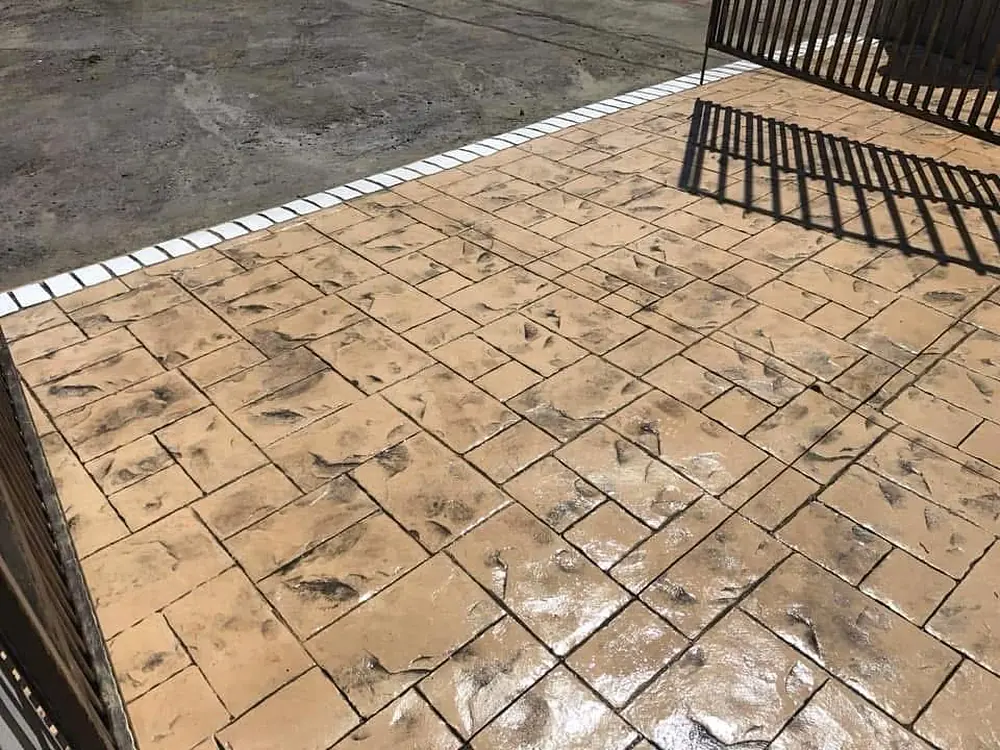
Detail of a finished stamped concrete surface: large-format slab texture, freshly sealed
The technical summary

Key figures

Temperature resistance
−50 °C to +50 °C
Surface
Stamped and sealed, seamless
Patterns
Fully customisable — natural stone, brick, timber, slate
Colours
Grey, sand, terracotta, anthracite — special colours on request
Timescale
Most surfaces within a few days
Walk on / drive on
Once cured — we give you the exact date at handover
Afterwards

Care: little, but regular

Day to day, a broom and water are enough. You can use a pressure washer without worry — the sealer stands up to the jet.

One thing you must not use: road salt. Salt attacks the sealer and shortens the life of the surface considerably. Clear snow in winter with a shovel or broom. If you have to grit, use chippings, sand or gravel — no salt and no salt-based de-icers.

The sealer is the wearing part of the surface. Depending on load and sunlight it will go dull at some point — then it is refreshed, rather than the surface being replaced.

Two cases where we advise against it

The ground has just been filled. Soil that is still settling will give way later — and a continuous concrete slab cracks if it has to move with it. In a case like that we would rather wait a season until the ground has come to rest.

Services are to be laid under the surface later. A closed slab has to be cut open for that — considerably more work than lifting a few rows of interlocking pavers. If you are planning something like this, tell us beforehand.

Resealing

After years it looks like it did on day one

Surfaces that have gone dull are cleaned and resealed — the colour comes back, the pattern stays. The concrete underneath is not touched. That is exactly why a surface like this lasts for years: what wears is the sealer, and the sealer can be renewed.

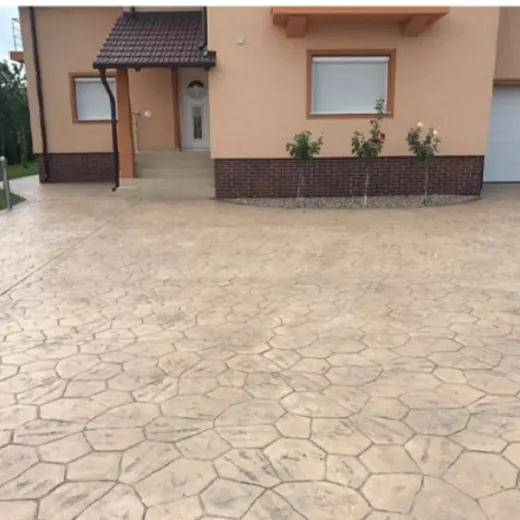
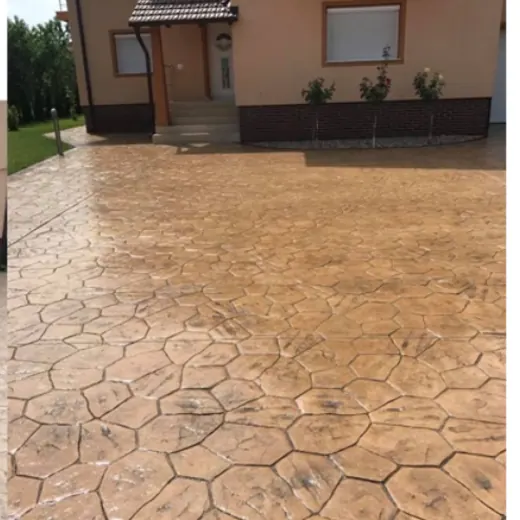
Driveway of a detached house

After several years of sun and rain the surface had faded and gone flat. After cleaning and a new sealer the warm tone is back, with visible depth in the texture.

Stamped concrete driveway, faded and dull before resealing
Before
The same driveway after resealing, colour and texture strong again
After

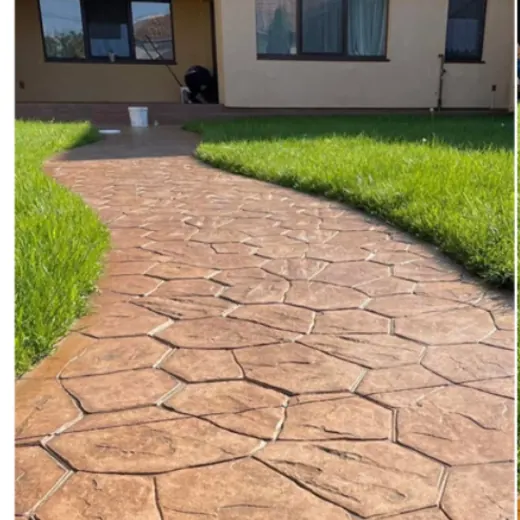
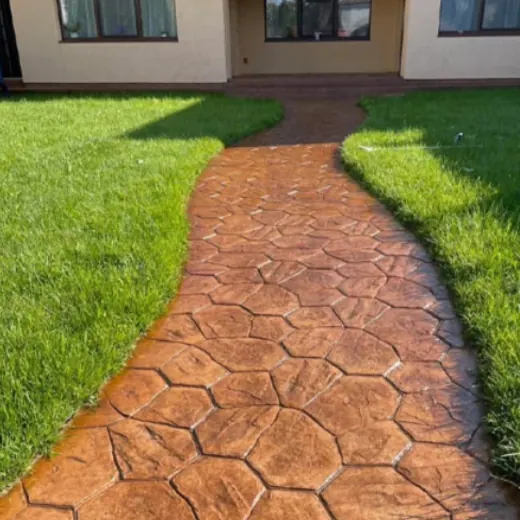
Garden path to the front door

The same path, the same stamping — only the sealer is new. The terracotta tone is rich again and the joint pattern stands out clearly.

Curved stamped concrete garden path, faded before resealing
Before
The same garden path after resealing with a rich terracotta tone
After

Driveway along the house facade

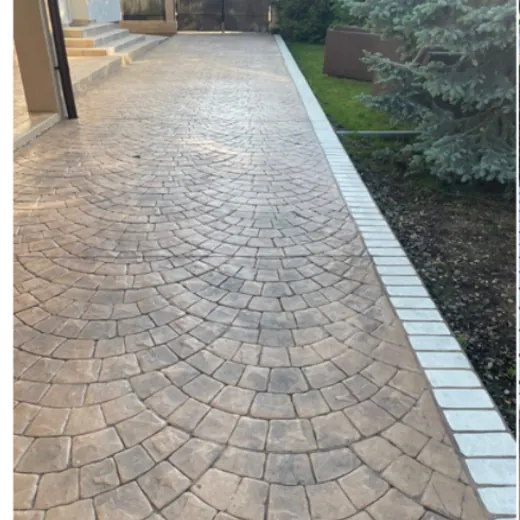
A heavily used driveway with a circular fan pattern. After resealing the surface has back the soft sheen that tells you the sealer is intact.

Stamped concrete driveway with a circular fan pattern, dull before resealing
Before
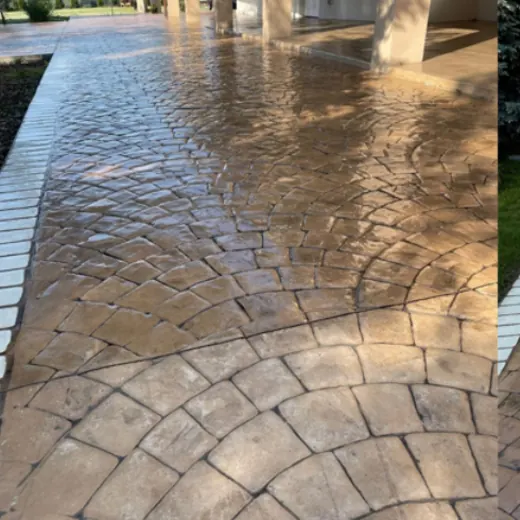
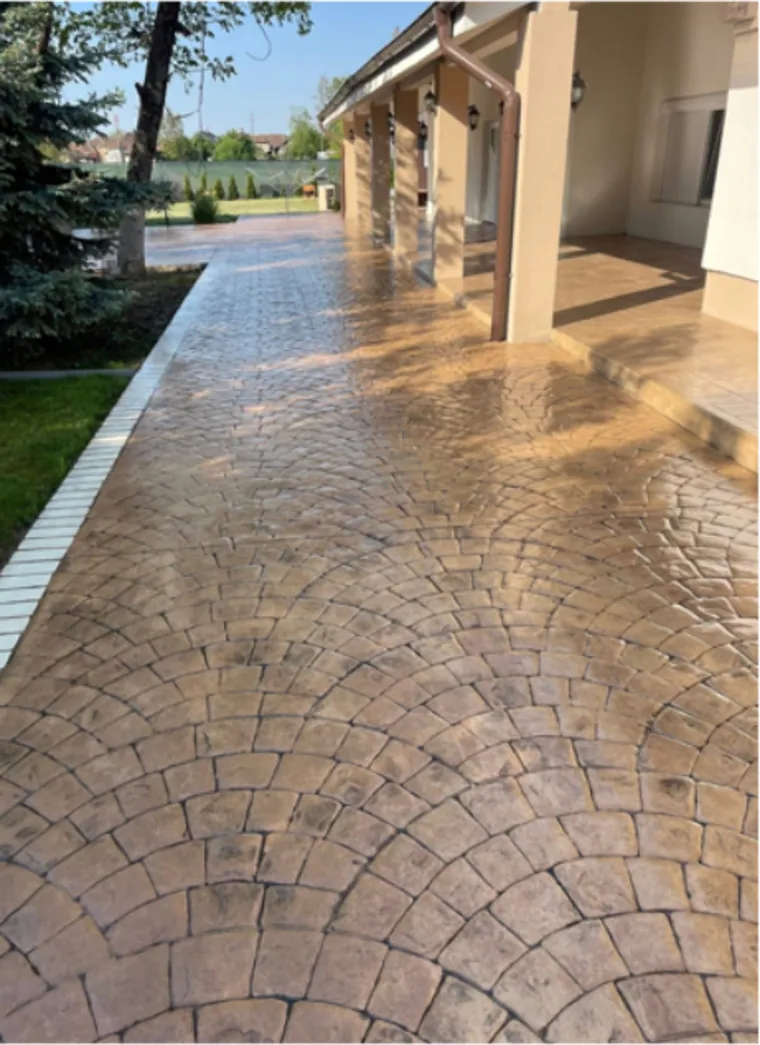
The same driveway after resealing, surface with a fresh sheen
After

How to tell the sealer is still intact

By this soft, even sheen. It shows the sealer is closed, so water, oil and dirt never reach the concrete in the first place. If the sheen fades after some years, the surface is not replaced — it is resealed, and it looks like this again.

Freshly sealed driveway in a circular fan pattern with a clearly visible sheen
After

Have your area measured

Consultation, measuring and quotation are free and without obligation. Give us a call or drop us a line about what you have in mind.

Call